Hand-Held History

20140309-183456.jpg
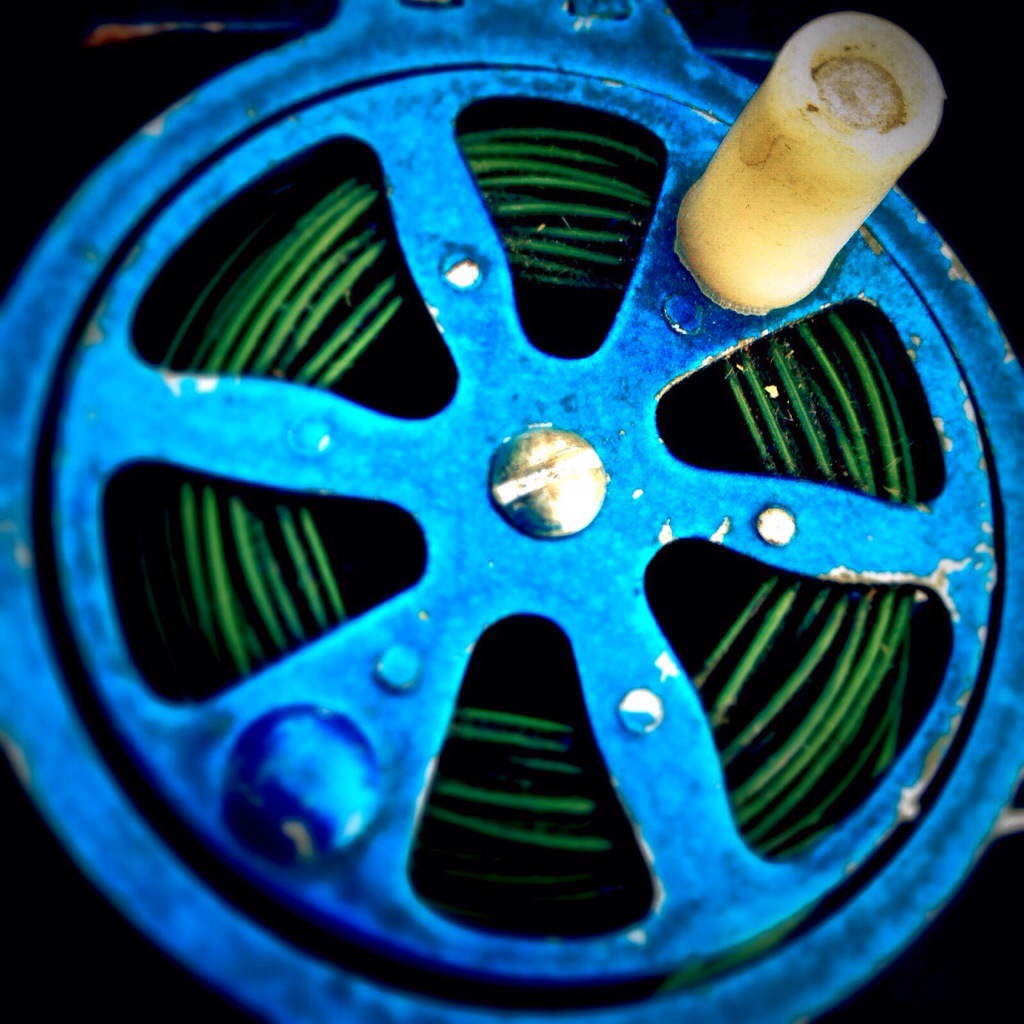
I am a sucker for #oldschool stuff, be it #motorcycles, #watches or fly fishing gear. I know that this reel is far from the best, but it served its purpose for someone very well. Look at the wear of the finish and the dirt on the handle from this persons thumb and fingers.

What stories would this reel tell? How about the angler? Where in the world has this reel been? To me, Fly fishing should always more than one’s fish count.
#flyfishermen #flyfishing #trout #travel #stories #reels

So You’re A Hot Shot. Top 5 Tips To Fly Fishing Humility

balance-canstockphoto3567006

True humility is intelligent self respect which keeps us from thinking too highly or too meanly of ourselves. It makes us modest by reminding us how far we have come short of what we can be.
Ralph W. Sockman

Malcolm Gladwell makes his living pointing out the powers of innate observation with statements akin to “something doesn’t feel right”  or that it takes a person 10,000 hours of doing something to truly be qualified as an expert. All this is good. But in my experience, sometimes a little knowledge can be dangerous in the wrong hands.

Why I say this is really very simple. Becoming arrogant about a talent seems to trump, being quietly humble.

Think of Dennis Rodman or Mathew McConaughey . Mr. McConaughey’s inspiration during his heartfelt acceptance speech is to meet his hero and his hero’s expectations. The problem is, his hero is himself   ten years from now. Whats up with that? (Here is the link to his now famous Oscar speech.)

Dear Mr. Rodman is a different case study and far from being low key. What he is, is just a train wreck of delusional bad judgement.  One sure-fire way of understanding a persons character is simply accessing the company he keeps. How’s the weather in North Korea Dennis?

AP_dennis_rodman_dm_130903_16x9_992

Now let’s look the other direction towards Dirk Nowitsky and Lupita Nyong’o. If you don’t know who these two are, Google it and you will realize that they both have changed the landscape in their fields of expertise without making a ton of noise. If you are a Dallas Maverick fan, Mark Cuban excluded, you know the character that Dirk brings to the game. I think all pro sports should learn from Dirk’s example. Lupita is just a class act through and through.

So what does this have to do with fly fishing, which I love so much? This style of fishing is wrought with humility. It is the key factor on which it was built. Know matter how “Extreme” the TV wants to make it with fast editing, cocky guides and house music, it is still about the solitude of the river and the environment; nothing more.

So I wanted to share with you five simple tips on becoming an expert angler with all the goods, as opposed to becoming an A-hole fly fishermen with just a bit too much information to be dangerous.

These are some of the things you see in the shop or on the river. The lack of general awareness that certain type of people bring to our beautiful sport and it’s hollowed waters.  I made very broad brush strokes, but here we go:

Do not become:

1) The “Amortizer

This is the guy that books a trip and then divides the cost of the trip with the amount of fish he caught. For example, “that’s one fish, $420. That’s two fish, $210 each”  and so on. This kills me and I have seen it more than once. I’m talking to you, CFO’s.

What an experienced Angler does here is recognizes what they want from their day. New spots, new techniques, a great lunch, and catching a really difficult fish. Maybe the tables could turn and the client gets charged  per every fish caught. Imagine that. It could be a very expensive day on a mid August Green Drake hatch.

2) The “Gierachian”

These are the people who have read everything John Gierach has written and believe they have a good handle on what fly fishing is all about. I love his stories. He is an amazing writer, but he says nothing about how you need to hold the rod up when you’re drifting a dry in fast water, or which float ant works wonders on a comparadun.

What humble veterans do is read Trout Bum on the plane and then ponder the structure of his own story following his weekend trip to “Pan”.

3) The “Complainer”

This one can be touchy but needs to be said – the guide is doing their best to put you on fish and hopefully big ones to boot.

What the guide can’t do is completely control which fish is going to eat your fly. So if you end up saying “That one wasn’t big enough”, then that’s blatantly not the right thing to say.  It screams “Squid”!

What a confident sportsmen does is reflects back to the days when they weren’t catching anything, taking a good look around and thinking, “What a beautiful day”. Then he thanks the fish for taking their fly.

4) The “Exaggerator” 

Never walk into the shop and blurt out a number. It is irreverent, boastful, and worst of all. And you don’t know if it’s the biggest number or the smallest number. Are you willing to gamble that? Let’s say you got twenty to the net – your best day ever and you could not be happier. Then you go back to the shop and somebody walks in and says they caught 50 (chances are they’re lying ..remember John Gierach’s book All Fishermen are Liars?). You might start to question the best day you have ever had, Why do that?

What my mentor and best guide I ever had the pleasure of working with, John High, would say as he walked back into the shop was simple, “Yep, we caught one”, period. And we all knew it was a gigantic number.

5) The “Exhibitionist” 

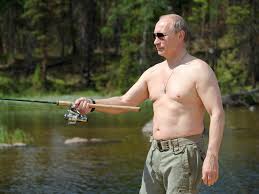
DO NOT under any circumstance take your shirt off on the river. This is just bad form. Chances are you are not tan, and if you are it is more than likely the most epic Farmer’s tan. You are not buff, most fly fishermen aren’t, and you’re using cut bait. Get my drift.

images-2

It is in the best interest for all of us to remain noble, understated and humble. We have chosen one of the most difficult and expensive way to catch fish, so we should present ourselves in similar fashion. Accept our rewards in silence, gloat to ourselves and celebrate our successes over an ice cold beer with good friends who are willing to listen to your lies.


The Outsider

Smokin fly

(This is a repost of an article that had written a bit ago for the Taylor Creek blog. I posted it here but. it was posted in the most horrible layout and unreadable font…but I fixed that. Please enjoy)

When you live in a small-town resort area, your perspective over time can become a bit skewed.

I made a living for nearly twenty years doing what most people dream about; spending my days on a beautiful river casting feathers, threads and hook to a waiting trout. But alas, no longer.  As with all things, life changes can be good or bad.

My path and life changes (always when a girl becomes involved) have recently led me to the beautiful city of San Francisco, far, far away from the hustle-bustle of Basalt, Colorado and the magnificent Roaring Fork Valley: The same Valley where a roundabout caused a wild uproar with the long time residents, many of whom are still upset that Highway 82 is four lane highway with God forbid, stop lights. Coincidently, these are same residents that welcomed Whole Foods like a favorite aunt coming home from a five year stint in a hippy commune. I love that.  That is the charm of living in a small town.

As a local, you just come to understand and accept, -almost expect- a somewhat closed mindedness of our type.  Of course I mean that in the most complimentary of ways. We forget what the pressures of city living is like: the traffic, all the in-our-opinion, the speed of life, and the idea or belief of how work is supposed to work.

First, let’s define work. In a city, work is a way to provide for your family. You keep your head down and grind it out to save for that two week vacation that will include your obligatory 1-3 days of fly fishing, all the while making sure that there is something else for the family to do. The difference in a valley like ours, is that you do the work that you want to do, avoid the work that you don’t want to do and fish before dinner, or more accurately, fish through dinner. That is really the way it is.

Now, my tables have turned.  I am now a city dweller, thinking and longing for the river. My perspective has now changed drastically. As a professional fly-fishing guide, your biggest concerns are as follows; is the water clear, what is the flow, what is the weather going to do today, is my client a gun or a squid?  It’s true.  Just like you would prejudge your guide, “he looks nothing like Brad Pitt” or “this is nothing like the the movie“. One of my personal favorites that was said to me from a client the moment we shook hands was, “I’ve read about a 24″ brown trout that John Gierach caught behind Two Rocks on the Fryingpan. I want to catch it”. We as guides sometimes make judgments too, but they are soft judgments that we never stick firmly to, as I have been surprised more often than not.

I have now become a pedestrian, living miles, not yards, away from the river, mentally planning my next trip to get out and wet a line. This is a new perspective for me. It has given me a much needed, new point of view of what an out-of-town client really comes to expect and what to leave with; serenity. I now get it. I am willing to pay, willing to travel, willing to spend my day with someone that is living a life that people dream of. I absolutely loved being a guide. I looked forward to hearing the stories about lifestyles that I never wanted to live; the grind, the tow, the stress, all things that make an urbanite tick. I am now one of them.

As of today, I have a couple hundred bucks saved up to make a trip back to the Valley and actually do what I used to get paid handsomely to do for years. What I have learned since leaving my amazing home in the mountains is to simply appreciate every day, and to be light handed on the judgment thing and to remember that everyone has their own story

When I tell people what I have done in my life, as I’m sitting at a craft beer bar in the Bay Area, they are captivated and awestruck by how I have lived my life up to this point. When I ask about their path, I often find that they are a major player in a well known social media company that I can only describe in 140 characters or less, that they are just 24 years old and have more money and toys than God. Somewhat amazingly, I never have envy. I have lived a life that they could only dream of living.

The river is part of me. I miss the sound and feeling of the current pushing against my legs in waders. I miss the rain at 4 o’clock everyday and the “pop” of a caddis busting through the surface. I now know what it’s like to be in the hype of a big city and looking for a fly shop just to check out what’s going on; it’s woven into me. I will always make trips back to the waters that I love, now fully understanding just how special they really are. And I will never take it for granted and realize that I too, will be “lightly judged” by the new guides, not know my history, my story, until we are out on the water and quietly proving that I’m a gun and not calamari.

[ I am now as I write this note, moving back to my native Colorado to Guide once again in the beautiful Roaring Fork Valley. Let’s go fish’n]


Rule #1: Know Thy Client

Know-Thy-Client 2

It is common knowledge that 7:30 in the morning is standard start time for most of the guides in our shop. Some consistently show up fifteen minutes early, while some of the veteran guides show up late, pretty much all the time. That’s not because that we veterans believe that we’re privileged, it’s because we have our system down, mastered like YoYo Ma approaching a cello. Our fly boxes are stocked with the right flies immediately after we get off of the river. We make sure that we have plenty of Dry Shake and tippet, including back-ups in the glove box. Our client lunches are already made or ordered.  Check, check and check.

It’s more than that though.  Those of us with a lifetime of trips under our belts are fortunate to have many returning clients. We keep in touch with our fishing guests both before and after their fishing trips. Many know the routine as well as we do.  Because of that, many of our repeat offenders don’t want to take part of the morning frenzy at the fly shop, rushing to get fitted in waders that don’t fit as well as they could and being told, “If they’re a bit tight, that’s okay. It is to suppose to fit like that.”  In reality, that’s just a line of guide BS to get you out of the shop and out onto the water as fast as possible. A guide that knows his client(s) well has already pulled their gear out in the correct and appropriate sizes. We’re that good.
To me, the truth is this: As a professional fishing guide, no matter how well you know the fish, the water or the bugs, the most important thing to know is your client(s).

You know that they prefer to throw a dry fly over a nymph but that they are okay with a dry-dropper because you know that works too.  Or that they like a turkey sandwich on wheat with no mayo. I have some clients that just want to fish in beautiful places, which isn’t too difficult of a request here in the magnificent Roaring Fork Valley. Other clients of mine only want to fish from 10am – 2pm so that they can sneak in a quick round of golf. My personal favorite request is when a client informs me to just make sure that his significant other is well taken care of, thus enabling him to book a return fishing trip, confident that she’ll allow him to do so again.

I would like to share with you one of my favorite client stories that happened a few years ago that has yet to be topped.  I call it, “The Three Requirements”

I arrived at the shop around 8 am and was told by one of the fly shop managers, Bob, that I had a pick-up in town. What that means is that I am going to meet them at wherever they might be staying. This client happened to be staying at The Aspen Institute. This information immediately screams a couple of things; the client is an out-of-towner and assuredly, is going to be in the upper percentile of income, and more than likely, an intellect. The Aspen Institute is a “think tank”, loaded to the gills with the world’s best movers, shakers and game changers; in other words, my kind of people.

So, Bob tells me that Ms. Fischer is expecting me promptly at 9:00 am and that I’d better get a move on it. He then rounds out that statement with, “And good luck”, said in a half snicker – half we’re praying for you, tone of voice.

“What do you mean by that?” I say.

Bob stumbles his wording a touch, realizing that he might have slipped up. “You’ll see. Never mind. Just saying.”

‘Great’,  I say to myself, trying to figure out how he can have such a strong opinion of Ms. Fischer with only a 5 minute phone call made to book this trip for her. What did she say to him? I was intrigued.

So, I get my gear for the day, jump in the truck and head to Aspen as fast as I can so that I wouldn’t be late, remembering the word “promptly”. What I did know is that I had twenty minutes to fret on what Bob wasn’t telling me about this trip at the shop.

I roll into The Aspen Institute and I see my client for the day standing exactly where she told Bob that she would be.  I pulled up, stepped out of my truck, walked up to Ms. Fischer with my hand out, ready to shake hands and greet my client.

“I’m sorry, I don’t shake hands.” she says.

I bring back my hand and say, “Okay then, it’s nice to meet you.”

“It’s nice to meet you too” she says. Now, I’m thinking that there might be some hope for today after all.

Not ten seconds had past and she blurts out, “I have three requirements for today.”  Then, an odd silence came over us.

A-ha, Bob’s words at the fly shop are becoming much clearer to me now. I ask politely, “And what might those three requirements be?”

She said, “One”, as she reaches in her bag and pulls out very beautiful short rod. “I only want to fish with this rod.”
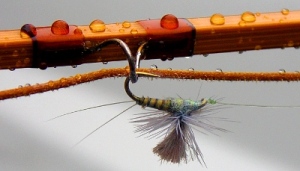
canerod
It was a gorgeous, handmade bamboo fly rod that was her crown jewel. “I want for you to fish with that rod all day”, I said in the same voice a kid would use as they’re just about to open and play with a new toy that they’ve been wanting for a while. “Sure, no problem”, she obliged.

“Two,” she says sternly, as she put up a peace sign with her fingers, “I want to catch fish that are only this big.”, as she lowers her hands to measures a gap between her two index fingers, something no bigger than six inches.

I have to ask, “Why’s that?”

As she reaches into her bag again, she proceeds to lift out a very small, handmade, birdseye maple wooden net with a hand-knotted basket that could not fit a fish much larger than 6 inches. The net was also made by the same artisan that crafted her impeccable fly rod. I am slowly beginning to understand my client. I could not wait to find out what the third requirement might be.

I ask with a light tinge of hesitance in my voice and slowly say, “And three?”

She says without missing a beat, “I want my experience to be lyrical”.  She went silent again, looking at me with a cold stare waiting for my answer to her challenge.

I look at her calmly, grab her bag of tricks and load it in to my old Toyota truck. “Let’ go, I have an idea”. She was pleased with my confidence and of my acceptance to her requests. The truth is, the only idea I had had was to get in the truck and figure it to on the road.

One thing a good fishing guide should be is becoming an expert of small talk with a purpose. Kind of like being a private investigator without your mark knowing that they are quietly being cross examined.  Here is what I found out:

a) She is in an unusual high-pressure job

b) She is an older, single woman and a bit too busy for a social life

c) She is very well traveled

d) Lives in the heart of Manhattan.

e) Enough said – I have a plan.

I told her, “I have the perfect place in mind, but it will take us about 30 longer to get there.  Is that okay?”  I knew it would be okay.  I’m driving and thankfully she had no idea that there was great fishing less than five minutes from her Aspen hotel.  So we drive along chatting, talking about the sites and local history.  She thinks that she wants to go fishing, but what she really wants is to simply get away.

Twenty minutes later we bypass two major rivers in our area, the Fryingpan and the Roaring Fork. I know you’re thinking…why?  Well that’s easy for me to answer.  My intention is to take her up into the high country creeks and oxbows that are filled with little brown and beautiful brook trout. No other fisherman in sight and a perfect place for a 6’6″ bamboo fly rod.
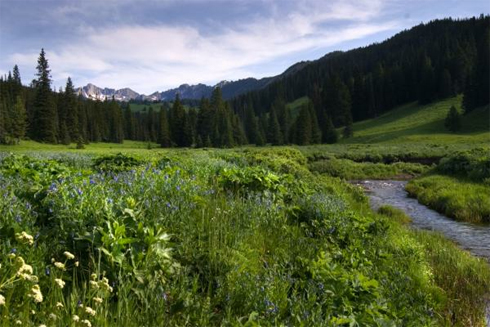
high-country-living-3

I pull my truck into a pull-out along the side of the dirt road that’s littered with open range cows and cattle guards. I open her cloth rod sock, set up her rod and grab her net with a smile on my face and say, “Are you ready?  Let’s go.”

All dear Ms. Fischer had to say to me at that moment was, “This is perfect.”, then that odd little silence showed up once again.

The importance and beauty of getting to know your client is really one simple rule: Try to know what your client wants before they even know what it is that they are truly seeking. 

Top Ten Survival Tips for a Broke Fly Fishing Guide Living in an Expensive Place.

438442326_640

Aspen. The mere whispering of the word congers up images of Paris Hilton, Man-Furs, Range Rovers and million dollar homes. And for the most part, that would be 100 % accurate. But Aspen, like any mountain resort town, is also filled with mountains and rivers that provide great outdoor activities. Many wealthy people enjoy that – as a matter of fact, most people enjoy that. Unfortunately, that “access” to the great outdoors, indirectly costs money.

You have to find a creative way to live in one of the most expensive places in the U.S.. Common sense told me that since I loved the outdoors and mastering legendary trout waters like the Frying Pan, Roaring Fork and the Colorado, becoming a professional fly fishing guide for a living was an obvious choice. But we guides are dealt a difficult set of cards.

First card: Getting on the shop roster is not always an easy task, even if you do happen to be one of the best anglers in the valley. I have been a guide with Taylor Creek Fly Shop in Basalt for the last 18+ years and I only landed it because a) I got a good referral from a buddy that was a guide there, b) I spent so much money there on new rods, flies and every other thing I needed to “fish properly” (besides, I felt it gave me a bit of credibility) and c) I was able to “talk the talk” and “walk the walk”.

Second card: You need money both for a place to live and so you can eat. This lifestyle can be especially difficult if you are on the bottom of the guide ladder. It’s only when the senior guides are not available when you get the trip. Being the low man on the totem pole, you have to hope for a last minute booked trip or wait by the phone all day hoping you’re next on the list to call. The lack of consistent last minute trips or senior guides calling in sick or being on vacation, can lead to financial stress and inconsistent diet. The only known consistency for a guide is understanding that the last minute bookers are not typically the seasoned fishermen you hope for. And chances are, these people will have recently watched “The Movie” and now they want their spoiled 5 year old daughter and disinterested 14 year old son to experience what catching a 20 inch rainbow is like – “just like the one Brad Pitt caught in A River Runs Through It” while yelling across the river, “You haven’t caught one yet?” only ten minutes after hitting the water.

But I digress. What I am trying to say is that guides need money. So I’d like to share with you my ten survival tips on how to live, eat and breathe fly fishing as a professional guide when you are broke and have to make it in an expensive area.

Tip # 1: Be nice, polite and humble. Nothing will keep you from getting trips or moving up the ranks more than arrogance. Chances are, you are not the greatest fisherman alive and you didn’t really “land a hundred” or “get the biggest cut-bow in the Pan”. The fact is, the guides in “real” fly shops are ALL great fisherman. The best thing you can do is go fishing with the senior guides and prove you know how to fish. But most importantly, be cool about it! This will pay off in spades. You are more likely to be the first one asked to accompany the senior guide on group trips. That equals no bottom of the totem pole which means more money.

Tip #2: Top Ramen is not all that bad. Really. Throw in some fresh vegetables and soy sauce and you’re golden.

Tip #3: Having a truck is helpful. It provides a comfortable ride for your clients as well as a great place to sleep. The forest service provides camp areas for up to 10 days or more. Not only is it a practical mode of transportation and lodging, but that it just makes for a good story when you decide to give up guiding in order to finally use your Political Science degree.

Tip # 4: Beer is not food. Once you get a couple of trips and you make your first tip above and beyond your guide fee, try not to turn that extra money into a series of cocktails for the boys. You need that money. It won’t be there in a few months. (Note to the veteran guides: hang around the new guides, they’re rookie enough to always be buying! By doing so, you can keep your tips.)

Tip #5: Network and always carry business cards. This is a must. Anybody on the river that isn’t already a fishing guide, wants to be. That instantly makes you the most envied and the coolest person they know. Use that to your advantage. Your perceived coolness, especially if you make the client think they caught that brown all on their own, equated to referrals, shop status and money. Don’t be a slacker trout bum, it’s still abusiness. Always be selling (yourself)!

Summer at the Aspen Airport

Tip #6: Remember, the rich are different. Embrace it. It is likely that a fleet of Range Rovers show up and they all step out with enough gear to stock a new shop. That doesn’t mean a thing. The fish don’t care and nor should you. They’re people – just like you (but with a lot more money). There’s no need to suck up. Treat them like you want to be treated and, trust me, you will be rewarded by either a great tip or a new regular repeat client.

Tip# 7: Practice the three “T’s” – Teach, Therapy, and Tolerance. Being a great guide is not how good of a fisherman you are (although it helps), it’s more about how well you understand your client. I did a trip one year with a client that I had guided a few times before. This trip she wanted to fish a little bit, but what she really wanted to do was to learn how to drive a stick shift. So our day was planned out where we fished for an hour, teach her how to drive my stick shifted-car for three hours, then fish again for an hour. She was a client for years. She booked consistently and always tipped well but what I found the most rewarding was never knowing exactly what we were going to do the day I was fishing with her.

Tip#8: Don’t sleep with any of your clients (see fishing above). Nothing good can come from this. Worst of all, you have turned a paying client into a non-paying client with “benefits”. And if it turns bad, like it always will, and their husband or wife finds out, there goes all of their referred client friends and any potential for new referrals from them.

Tip# 9: Have another skill. It can be anything from tuning skis to bartending to instructing snowboarders to practicing law. Also, being a trust funder, salt-water fly guide, or a chef, will work. It is not only important to have a plan, but as a fly guide in a touristic, seasonal, resort destination, with unpredictable run-off and conditions, you must also have a Plan B, and C all the way up to Z. Sure, some people can and do make it as a full time guide, but only if you are willing to budget. Unfortunately, most guides are fiscally inept and easily led astray by being surrounded by pro-deals and new gear in the shop – there is always that new reel or new 9-weight rod you might need for that Christmas Island trip you’ve been saving up for. This one I know from experience.

Tip # 10: If you really love fly-fishing, you love the river and everything it offers. Remember that you weren’t born an expert fly fisherman and your clients want to learn from you. You’re on the right path. It’s not hard to survive if you’re smart about it.

So if your ambition is to become a wealthy, full-time fly fishing guide, traveling around the globe and living the lifestyle, go for it. The fact is, I live that life style. I may not wear Man-Fur or have enough money to date Paris Hilton, but I am rich in experience and I have made a bank load of friends. The only cash I have is a CD in my truck of Johnny Cash, Folsom Prison Blues. To tell you the truth, I wouldn’t change a thing.

Glenn Smith

(This is an article I wrote for Taylor Creek Fly shop which I was a professional guide for 18 years.I also submitted to The Drake Magazine, I think it’s pretty good. Let me know your thoughts.)