Mastering Fly Fishing In Colorado: A Seasonal Bug Guide


take the time

If you’ve ever stood knee-deep in a Colorado river, rod in hand, and thought, “What the hell are these trout eating?” — welcome to the eternal question. I’ve been guiding these waters for over three decades, and when I’m not tying on leaders or #22 midge patterns, I’m reaching down in the river flipping rocks like a mad scientist. The trout don’t give up their secrets easily, but the bugs will if you know how to ask.

As a guide, this isn’t just fly fishing, It’s entomology in waders. The best anglers I know read rivers the way a chef reads produce at the market — they can smell what’s fresh, what’s in season, and what’s about to come on strong.

Let’s walk the Colorado calendar, month by month, bug by bug.


🔍 First, a Quick River Trick

Forget Latin names for a moment. You don’t need a PhD to tell what’s going on — just curiosity.

  • Turn over a rock in a riffle. If you see a little flat pancake bug with three tails, that’s a mayfly nymph. If you see a worm in a stick coffin, that’s a caddis.
  • Dip a net. Shuffle your boots and let the current wash the bugs in. You’ll see the season’s truth in mesh.
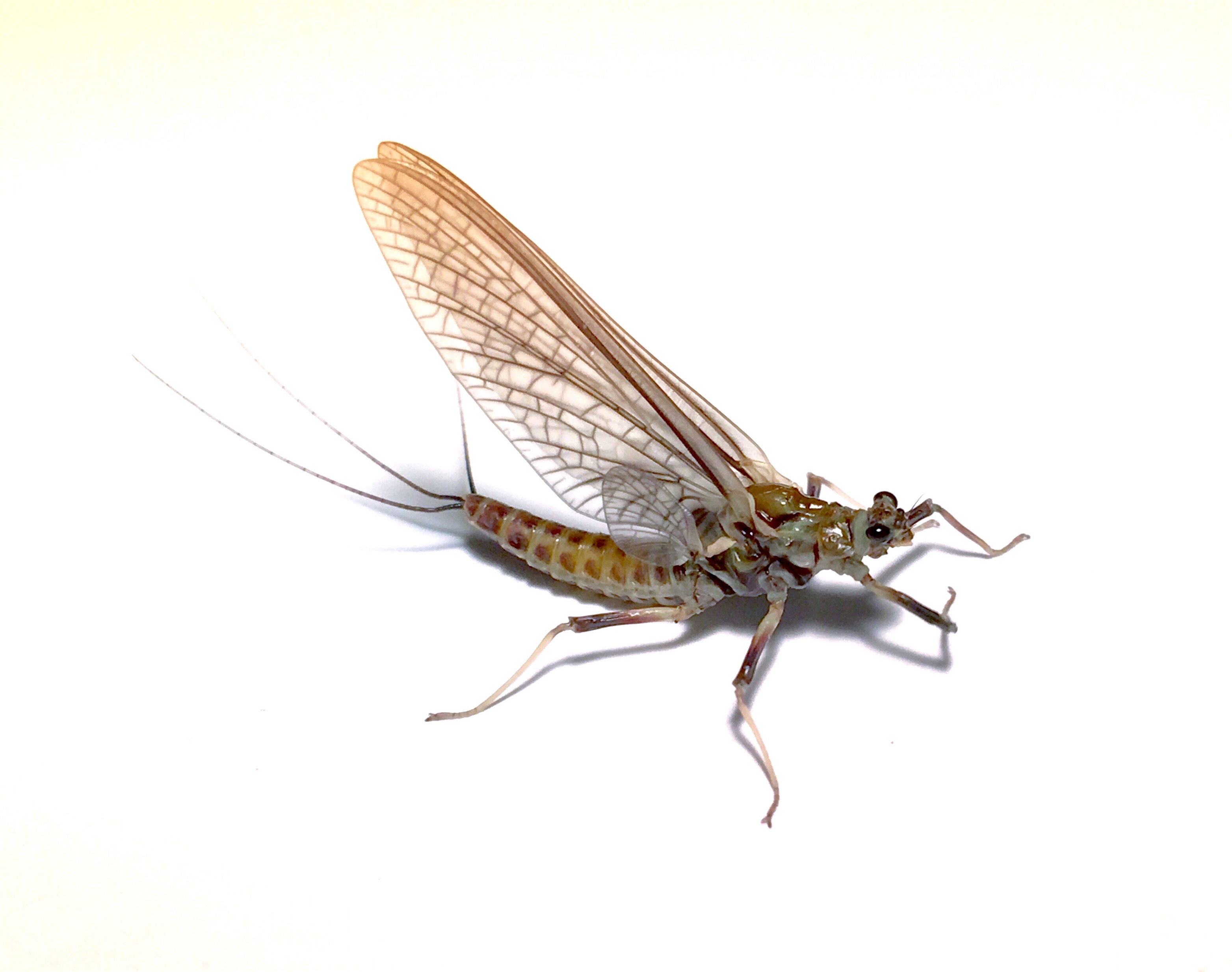
  • Watch the wings. Mayflies hold them like tiny sailboats, caddis fold them like pup tents, stoneflies lay ‘em flat like a paperback novel.

It’s river code. Break it, and suddenly your fly box starts to look like a menu instead of a mystery.


🌦️ Colorado’s Bug Calendar

January – February

The rivers are cold, the trout are sluggish, but the midges never quit. Tiny black, olive, or red specks. If you’re not fishing flies smaller than your fingernail, you’re just decorating hooks.

March

Here come the first Baetis — Blue-Winged Olives. Cloudy afternoons, the river suddenly wakes up. Trout start rising like champagne bubbles. Tie on a size 20 parachute and you’re in business.

April

Stoneflies start creeping along the banks. Still some Baetis. This is the season of patience — trout are looking but not gorging yet. Small stones fished tight to structure can turn heads.

May

The famous Mother’s Day Caddis — thousands in the air, a snowstorm of wings. You’ll either have the best evening of your life or watch trout eat everything except what’s tied on your tippet.

June

Runoff. Chocolate milk flows. But don’t panic — bugs don’t stop because the river swells. Golden stones, a few drakes higher up. Fish edges, back eddies, and bigger, juicier patterns.

July

The big show: Green Drakes. Evening magic, trout boiling in shallow riffles. PMDs and Sallies mix in like side dishes. This is Colorado’s fireworks.

August

Tiny Tricos in the morning — clouds of black and white mayflies spinning like smoke. Midday turns to hoppers, beetles, and ants. Fish get picky, so you either go microscopic or foam-bodied.

September

Fall Baetis arrive, olives against gold cottonwoods. Low water, spooky trout. Long leaders, soft casts, and faith in flies you can barely see.

October

Blue-Winged Olives again, joined by the occasional pumpkin-sized October Caddis. If you’re tired of tying tiny dries, throw a size 12 orange Stimulator or Hopper and watch a brown trout rocket from the depths.

November – December

We’re back to midges, small, steady, reliable. Winter trout are honest — they won’t chase, but they’ll sip if you give them something believable.


🧾 Closing Thoughts from the River

Every river has a rhythm, and every bug has a season. Learn that, and you’ll stop guessing what to tie on — you’ll know.

I’ve guided long enough to see anglers frustrated, overthinking fly boxes, swapping patterns every five minutes. My advice? Slow down. Pick up a rock, kneel by the bank, let the bugs tell you the story. The trout are just following the script.

Also watch for birds. They can tell us so much about timing but I’ll save that for another time.

Remember, once you learn to read the river’s menu, you’ll never fish the same way again.


Casting for the Future: Conservation, Habitat, and the Ethics of the Catch


Fly fishing, at its core, is a celebration of nature — a quiet, deliberate communion between angler, river, and fish. But as the sport grows in popularity, so too does the pressure on the very ecosystems that make it possible. For those who stand in cold water, reading riffles and stalking trout, conservation must become more than a cause — it must be a responsibility.

The River Gives — and Needs Our Help in Return

Healthy waterways are not accidental. They are the result of tireless work: habitat restoration, water quality monitoring, erosion control, and public education. When we neglect these systems — when roads cut off spawning beds, when cattle trample riverbanks, or when temperature spikes go unchecked — fisheries falter, and fish populations suffer.

Trout, for instance, are remarkably sensitive to water temperature and oxygen levels. Remove the riparian shade of willows and cottonwoods, and the water warms. Let sediment from development run unchecked, and the gravel beds needed for spawning clog and smother eggs. It’s a chain reaction that takes years to repair and only days to damage.

The Ethics of the Catch: Proper Fish Handling Matters

Catch-and-release, when done correctly, gives fish a fighting chance. But mishandling a fish — squeezing it, keeping it out of water too long, or fishing in water that’s too warm — can turn a release into a slow death sentence.

Here are five non-negotiables for ethical fish handling:

  1. Wet Your Hands before touching any fish to avoid removing its protective slime coat.
  2. Minimize Air Exposure — aim for no more than 10 seconds out of water.
  3. Use Barbless Hooks to reduce injury and handling time.
  4. Avoid Fishing Warm Waters (especially above 68°F/20°C), when trout are highly stressed.
  5. Don’t do “That Pose” for your pic — don’t “hero shot” it, it’s dumb.

Damage Done When We Don’t Act

Neglect isn’t always malicious — sometimes it’s ignorance. But the result is the same: fewer wild fish, degraded rivers, reduced access, and a loss of future generations who may never experience what fly fishing once was. Left unchecked, poor practices lead to fish kills, disease outbreaks, invasive species dominance, and irreversible habitat loss.

I witnessed the whirling disease outbreak first hand in my part of the world, not good.

Where You Can Make a Difference

Individually:

  • Pack out trash — yours and others’.
  • Take a moment and educate new anglers on proper handling and etiquette.
  • Join local river cleanups or streambank restoration days.

Nonprofits to Support:

For-Profit Organizations with Conservation Ethics:

  • Patagonia: Long-time advocate for wild rivers and public lands.
  • Fishpond USA: Uses recycled materials and partners with conservation groups.
  • Orvis: Offers grants and contributes heavily to watershed health projects.
  • Your local fly shop: Become involved in the community

Fly Fishing Is a Contract

It’s a contract with the river, with the fish, and with the future. Each cast is a chance not just to catch, but to care. If we want our beautiful wild places to remain wild — if we want to pass our passion down to others — we must be more than be anglers. We must be stewards.

And stewardship isn’t a sacrifice. It’s a privilege.


Finding Purpose: The Struggles of a New Winged Being

I’d always known the water—cool, flowing, sheltering. In its currents, I had spent my days as a nymph, tucked beneath the stones and natural debris. The river was my home, my safety, where I could feed, mature without to much worry. But there was something deeper inside me, something I couldn’t quite name. It had been growing for days, an itch under my skin so to say, a pull toward the surface.

Today, the pull was unbearable. I couldn’t stop it. I tumbled off the stone the had been my home and I broke through the surface, feeling the weight of the water release me, and suddenly I was… light. I shed my casing with much effort My body had grown delicate. Wings—yes, wings—unfurled from my back, wet and fragile like the new dawn. What was this new world above? It shimmered and glowed.

Hope. It filled me. The sky, limitless and vast, whispered promises of something more. I lifted off the water and climbed into the air, wobbly at first but gaining strength, feeling the wind beneath me. I was made for this! The river below me became a distant memory.

But then… danger. A shadow flashed across the surface—silent, swift. A bird, its beak sharp and hungry, dove at me from nowhere. My new wings, so graceful moments ago, faltered. I spiraled in the air, narrowly avoiding its deadly grasp. I felt panic rise in me—what was I? Why was I here? Is this all there is?

More shadows moved below. The water rippled ominously as trout eyes watched from beneath, waiting for me to tire, to fall.

Despair gnawed at my insides. Was I only meant to be eaten? Was my transformation nothing but a fleeting moment of beauty, a brief life in the jaws of some greater predator?

But then, something stirred deep inside me. A memory, maybe, or instinct, telling me this was not the end. Not yet. I wasn’t meant to die here. I had more to do. I felt a new surge of energy, my wings catching a favorable wind, pulling me up, away from the hungry trout and snapping beaks.

I darted between the trees, weaving through leaves, narrowly avoiding another grasp. I could feel it now, a purpose—an unspoken command imprinted on me before I was even born. I had to survive, to mate, to give life to the next generation.

With a sudden burst of speed, I shot higher, soaring into the open sky where nothing could catch me. And in that moment, I knew. The world was harsh and filled with danger, but I had my part in it. I wasn’t just prey. I was part of something bigger, a cycle that stretched endlessly into the future.

I wasn’t afraid anymore.

I found a quiet space, hidden away from prying eyes, and began the final task that I had been brought here to do—laying the seeds of new life.

Tight Lines