The Soundtrack of the Stream: Should You Fly Fish with Music?

Fly fishing is a rhythm. Cast, drift, mend, repeat. It’s the cadence of the river, the whisper of the line, the sudden, electric pull of a strike. But should it have a soundtrack?

Some anglers swear by the purity of silence—just you, the water, and the fish. Others like a little background music, maybe even headphones tucked under a cap, providing a personal playlist while they work a hatch. Is one approach better than the other? Let’s wade in.

The Advantages of Fishing with Music

1. It Sets the Mood

Music can shape the experience. A slow morning with mist rising off the water? Maybe some jazz, something with a little swing to match the rhythm of a dry fly landing just right. Chasing aggressive browns at dusk? Some bluesy rock or even a little outlaw country might fit the mood.

2. It Can Keep You Focused

If your mind tends to wander, music can be a good way to stay dialed in. A steady playlist might help you keep a patient rhythm while waiting for the right moment to strike.

3. It Drowns Out Distractions

Wind noise, distant highway hum, the occasional weekend warrior shouting about the one that got away—music can keep you in your zone and help block out anything that disrupts your flow.

4. It Adds Personal Enjoyment

Not every fishing trip is about hardcore technical casting. Sometimes, it’s about relaxing. If music helps you unwind while you stand knee-deep in cold water, why not?

The Disadvantages of Fishing with Music

1. You Lose Some of the Natural Soundscape

One of the greatest parts of fly fishing is the soundtrack nature provides: the murmur of the current, the slap of a tail, the sudden, sharp rise of a trout breaking the surface. Music can drown out these subtle cues and make you feel less connected to your surroundings.

2. Safety Concerns

Headphones can block out important sounds—like a fast-moving drift boat, a startled bear crashing through the brush, or a buddy calling out a warning. Even just background music on a speaker can dull your awareness of what’s happening around you.

3. It Might Affect Your Fishing Instincts

Fly fishing isn’t just about seeing the fish; it’s about feeling them. Sometimes, you hear the rise before you see it. If you’re locked into a song, you might miss that soft plop that tells you where to cast next.

4. It Can Distract from the Experience

Some anglers fish to disconnect. Adding music—especially if it’s coming from a phone—might keep you tethered to the world you’re trying to escape. Notifications, texts, even the temptation to check the time can pull you out of the moment.

The Verdict? It’s Personal.

There’s no right or wrong answer here. Some days, a little background music enhances the experience. Other days, the river itself provides all the sound you need. If you go for headphones, maybe keep one ear open. If you play music out loud, keep the volume low and be mindful of others who might prefer the quiet.

Because at the end of the day, the river has its own music. Sometimes, it’s worth listening to.

Mastering the Drift: The Key to Successful Trout Fly Fishing

It is a morning like every morning during the end of summer, the beginning of fall. The air is brisk and the temperature is cool, almost cold, but a fine welcome. I meet my clients for the day, eager to get out there and catch a fish… but it is never that easy for the leisure, once a year angler to do. I say right from the get go, “Fly fishing for trout is not an easier way to catch a trout. It’s the most difficult way to catch a trout”.

Why do I say that? It is because those of you out there with years under your belt, know I am right. What we do is a process, not a shortcut. We have to look at everything. We first look at the weather, the outside temperature. Then we look if there is any cloud cover or not. Next we watch for birds, do we see them or not? If they are flying high or low, or on the water. Next, we look closely for the insect life on, in or above the water. We ask ourselves, what kind of hatch is it? Or if there is any hatch at all? All this takes place well before we even cast a line.

With all that said, what is the most important thing above and beyond the aforementioned you must master? Is it the choice of flies? Is it how well you can cast a dry? Roll cast a nymph? Is it recognizing a strike? Is it the drift? Is it how gentle or how hard you set the hook?

These are all valid questions. Every guide has their own opinions about which one is most important. But to me, there is only really one answer, it is always the drift.

Having a proper drift separates the pros from the rookies. I can attest to this. Even the wrong fly drifted properly will interest more fish. Better than the right fly, drifted terribly. This has proved to be true more often than not.

Is the cast and presentation important? Yes and no. A great cast is wasted if the drift is terrible. What is the point of throwing 50 feet of line across the current? It won’t work if you can’t get the fly to drift naturally.

When it comes to recognizing a strike, the drift still matters. A fast moving drift with tons of line in the water is near impossible to set the hook. If you’re “nymphing”, the strike indicator will never give you an honest read, a missed opportunity. If you’re throwing dries, a bad drift never will give your fly a natural, buggy look. You’ll miss another opportunity.

With all this said, how should you move ahead and always achieve a perfect drift? It is simple. Line management. keep these things in mind;

-High stick whenever you can. Alleviate a problem before it becomes a problem.

-Keep the line you’re casting within your comfort zone.

-Fish to the fish in-front of you. Your target isn’t always on the other side of the river.

-Drop the ego casting and get that fly in the water.

-Stop over mending. Do one or two quality big mends and stop messing around.

-Last of all, none of this applies if you’re ripping streamers.

Do me a solid. Please remember that the insects in the river move at the pace of the water they are in or on. Always copy nature.

Tight Lines

Glenn on the Fly

6 Things To Do Before You Cast A fly.

20080817_Fishing_004-1

We, as humans, inherently are impatient. Remember the time while you were sitting at the stop light and the light turns green and the car in front of you didn’t move as quickly as you thought it should have? Or that time you were at Starbucks and the customer in front of you hadn’t made their drink decision by the time they reached the counter? How did you feel? Stressed? Angry?

What’s important in these examples is that, why were you getting bothered? More importantly, even before those incidences happened you were ALREADY preparing to be bothered. You were locked and loaded with frustration waiting for a reason to get rattled. You’re thinking, what does this have to do with fly fishing? In my opinion, everything.

It has to do with expectations, what you believe should happen. You hit the river with expectations about how many fish to catch, that your favorite hole will always be open, you’re only going to fish dry flies, so on and so fourth. Fact is, none of those things are in your control. What is in your control is that you know you’re going fishing, that’s it…unless there is a car in front of you refusing to drive fast enough, you may be late…

What I want to offer is simple 6 things that will make your day on the river perfect, before you wet a fly:

1) Be thorough; Just take the time to look at your stuff and take inventory. Look in the box and see what flies you have and what flies you need. Make sure you have everything you need for a day out on the water.

2) Ask questions and be open minded; Be the guy that comes in the fly shop that the shop guys are happy to see and the guides want to talk to. Leave the fishing ego and stories at home.

3) Don’t run to the water; I have seen it a million times, people race up the road and jump out of the car to be the first on the river. Staking out territory is, unfortunately, a residual effect of more anglers on the water, but it is unnecessary. There is always some place to fish, be open to new water, it might be a new great spot.

4) Look up; Every fisherman, I think, is to eager to start casting. Take time to watch for birds, Where they are? Are they high or low? Are they feeding? What there eating? This can tell you a lot and give you great information. If the birds are high, you are best nymphing. If they are low, a hatch is starting and that’s a great thing.

5) Make and take time; Notice everything…the trees, rocks, the weather, the weeds, the colors and the smells…all of this adds to your experience. Most importantly, it’s why we are out there.

6) Remember; Remember that you work hard, remember the chores you still have to complete, remember that we are lucky and that a fish eating our flies is a gift. So remember to remember.

If you add these tips to your day and learn to expect nothing, you may find that you will always have the best day ever.

Tight Lines

Guide Glenn Smith

High Sticking Dogma

Glenn Tenkara

There is a new kid on the block that seems to be shaking up what we “dyed in the wool” fly fishermen hold sacred. It has us questioning our technique, our skill, our pride of years of practice of becoming seasoned anglers. This “Kid”, this trend, is called Tenkara.

Tenkara is not a kid at all; in fact, it is very old. It is a fishing technique that originated in Japan hundreds or millions of years ago, when a pole, a short line and a lure were all you needed to catch a fish. A fishermen back in the day would take this basic combination tool to their streams, catch and keep some fish, and live happily ever after.

Now let’s fast forward a bit. Fishing has become a sport. Fish are caught for the enjoyment of the chase and the fight, and then they are put back in the river for the next fishermen to catch. The equipment has evolved as well. We now have micro-technology rods with specific line speeds and weights, made with exotic woods and sterling silver. Reels that have more engineering involved than the first lunar module and fly lines that float and sink at our will. And a selection of flies for sale that the shear number available surpasses the actual number of living insects. Amazing. Evolution is grand.

Tenkara is here to put a bit of perspective back into our primal needs. It is here, I think, to stay. John Gierach is behind it, Yvon Chouinard is an advocate, and guess what, I think I will follow suite.*

*By no means completely

If you have taken anytime to read some of my other blog posts, you will understand why I would gravitate towards Tenkara. It sums up my deepest personal values in a compact, retractable, graphite package. Please let me explain.

I have spent my entire fishing career pondering exactly why I love fly fishing. As you would expect, there are countless reasons: the hunt, the riddle, the fish, the surroundings, the peace and quiet, mastering my skills, showing up my friends, the stories, and simply, being part of an exclusive club. After a hiatus away from the river, it became clear that there was something I was missing. It was the religion of fly fishing I enjoyed, the Zen of the process I loved, the unity between me and my environment that keeps me coming back. Then, enter Tenkara.

1137379_300

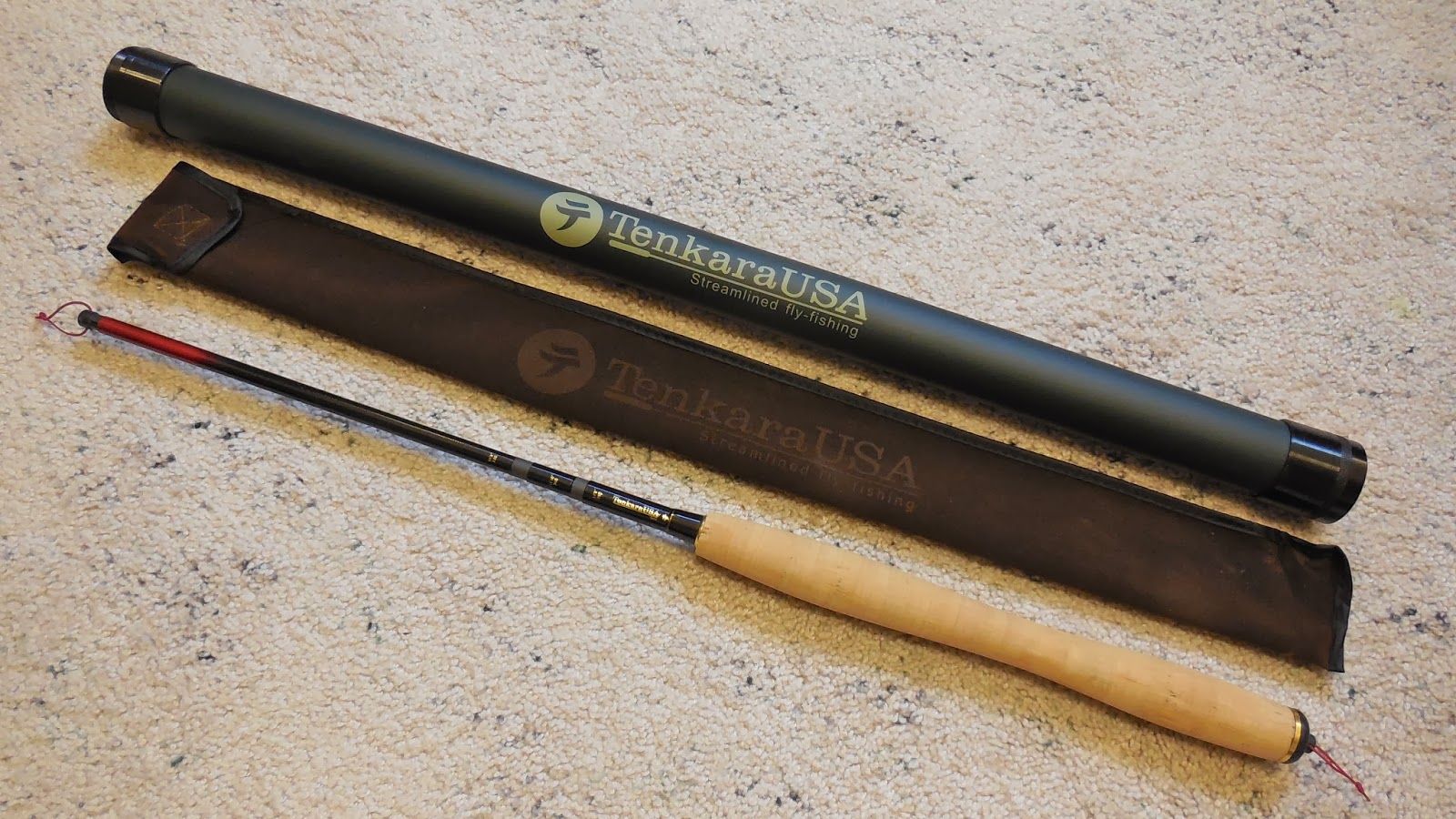
A few years back, Daniel Galhardo of TenkaraUSA set up shop ( I will provide the link to his site to explain his history). My good friend Frank, a fishing and motorcycling buddy of mine, who, also in fact, seems to be in the forefront of undiscovered cool, introduced me to this new style of Japanese fishing. The equipment is simple – it is a smallish telescoping rod, some nylon line, a bit of tippet and a Tenkara fly, which is a sparse wet fly. There is no reel and no ferrels. Think Huckleberry Finn meets the 20th century.

I was intrigued. I asked Frank if he would let me use his Tenkara rods/pole/graphite sticks or whatever you want to call it, and go fishing. He excitedly said yes and made plans to meet at my shop. Frank shows up right on time carrying what appears to be a short metal tube that looked more like an extra long holder for a “Churchill” cigar, one small flybox and a 3-inch custom looking spool wrapped in multi-colored filament, and that’s it.

Image from TenkaraUSA

I have all of my gear which is a 5-weight rod and reel, and a fully stocked vest as well as a lanyard…just in case. I placed my rod in the back of his truck, carefully feeding it through the back window to protect the tip. He stuck his Tenkara rod in his back pocket. I have a similar feeling when I go skiing with my snowboarder friends; I carry my boots, poles, and skis. They wear their boots and toss their board in the truck. Very easy, unincombered, and very Zen.

So we take a drive up the Frying Pan looking for some good water to try out this new technique. Frank is pretty easy about where we go and was open to my suggestions being that is what I do for a living. We stop near the 7 mile marker where there is a great mix of pocket water and good runs, it was perfect.

Frank brought two of his new fangled rods, each of different lengths and flex. He hands me the “soft” one then proceeds to give me a short tutorial on how to set this thing up. It is a series of simple slipknots from the tip to the fly. The Tenkara flies are sparse; a hook, some thread, a forward facing hackle, again, simple. When I looked at them, it all started to make much more sense.

tenkara-fly-kebari-ni

He had a process that he liked to follow. Keep the rod retracted and tie on the end of the line, then slowly extend the rod as you carefully unwind the line from the spool. Deliberate, thoughtful. Then we chose a fly and tied it on in my traditional way, a modified clinch knot. We put on zero weight, you fish these flies more like a wet fly, not so much as a Dry or a Nymph.

We hit the river and away we went. The way you fish this rod is as if you are high-sticking pocket water. Sharp, laser-focused casts with emphasis on the action of the fly and less focus on line control. Up to this point, there were very few differences between Tenkara and fly fishing, but this is one of them. There is no “ten to two” motion, more like “ten to noon” motion but curt, prompt, decisive.

At first, I wasn’t really loving this. It seemed rudimentary. I felt amateur, like a kid with a long stick and a leader on it hoping something possibly will take my “bait”. Then, suddendly (and finally) I had a strike. My focus changed. My thoughts went from the rod and awkward process to wondering why I got a fish to take that fly. On my next cast, I stuck him; instinct set in and I reached for the reel, but there was no reel to be found. Calmly panicked, I lifted the fully engaged, beautifully bent rod above my head tin attempt to lead the fish to calmer water. I maneuvered the rainbow to the nearest eddy, carefully grabbed the line and brought him to my net. Grabbing the line this way is taboo in my world as a guide but I apparently common in the Tenkara world. Funny thing is, this is the part I fully enjoyed. It made me realize that I need to take ALL variables into account: where I stand, what I am going to do when I get a fish, looking long term at the short term process and recognizing problems and solutions before you need them. I couldn’t just horse him in or let him run into my backing, I had to antisipate where and what he was going to do with only 12 feet of line attached. I had to think of my positioning and my next ten steps. Nothing is more Zen, becoming exclusive with your environment, simple process for a complicated task. Pretty cool.

Small Rainbow

I will say this, I will not give up any of my rods and gorgeous reels and replace them with Tenkara rigs, but I will for sure have them as part of my routine as a refreshing change of pace. One thing is for sure, you will find me on any day that the hatch is going strong with a single short line and a long rod pulling fish off the top looking as if I had reached Nirvana. It is that cool.

Be sure to look me up at Taylor Creek Flyshop if you are in the Roaring Fork Valley if you are interested in learning Tenkara and enjoy another level of river philosophy.

Glenn

Top Ten Survival Tips for a Broke Fly Fishing Guide Living in an Expensive Place.

438442326_640

Aspen. The mere whispering of the word congers up images of Paris Hilton, Man-Furs, Range Rovers and million dollar homes. And for the most part, that would be 100 % accurate. But Aspen, like any mountain resort town, is also filled with mountains and rivers that provide great outdoor activities. Many wealthy people enjoy that – as a matter of fact, most people enjoy that. Unfortunately, that “access” to the great outdoors, indirectly costs money.

You have to find a creative way to live in one of the most expensive places in the U.S.. Common sense told me that since I loved the outdoors and mastering legendary trout waters like the Frying Pan, Roaring Fork and the Colorado, becoming a professional fly fishing guide for a living was an obvious choice. But we guides are dealt a difficult set of cards.

First card: Getting on the shop roster is not always an easy task, even if you do happen to be one of the best anglers in the valley. I have been a guide with Taylor Creek Fly Shop in Basalt for the last 18+ years and I only landed it because a) I got a good referral from a buddy that was a guide there, b) I spent so much money there on new rods, flies and every other thing I needed to “fish properly” (besides, I felt it gave me a bit of credibility) and c) I was able to “talk the talk” and “walk the walk”.

Second card: You need money both for a place to live and so you can eat. This lifestyle can be especially difficult if you are on the bottom of the guide ladder. It’s only when the senior guides are not available when you get the trip. Being the low man on the totem pole, you have to hope for a last minute booked trip or wait by the phone all day hoping you’re next on the list to call. The lack of consistent last minute trips or senior guides calling in sick or being on vacation, can lead to financial stress and inconsistent diet. The only known consistency for a guide is understanding that the last minute bookers are not typically the seasoned fishermen you hope for. And chances are, these people will have recently watched “The Movie” and now they want their spoiled 5 year old daughter and disinterested 14 year old son to experience what catching a 20 inch rainbow is like – “just like the one Brad Pitt caught in A River Runs Through It” while yelling across the river, “You haven’t caught one yet?” only ten minutes after hitting the water.

But I digress. What I am trying to say is that guides need money. So I’d like to share with you my ten survival tips on how to live, eat and breathe fly fishing as a professional guide when you are broke and have to make it in an expensive area.

Tip # 1: Be nice, polite and humble. Nothing will keep you from getting trips or moving up the ranks more than arrogance. Chances are, you are not the greatest fisherman alive and you didn’t really “land a hundred” or “get the biggest cut-bow in the Pan”. The fact is, the guides in “real” fly shops are ALL great fisherman. The best thing you can do is go fishing with the senior guides and prove you know how to fish. But most importantly, be cool about it! This will pay off in spades. You are more likely to be the first one asked to accompany the senior guide on group trips. That equals no bottom of the totem pole which means more money.

Tip #2: Top Ramen is not all that bad. Really. Throw in some fresh vegetables and soy sauce and you’re golden.

Tip #3: Having a truck is helpful. It provides a comfortable ride for your clients as well as a great place to sleep. The forest service provides camp areas for up to 10 days or more. Not only is it a practical mode of transportation and lodging, but that it just makes for a good story when you decide to give up guiding in order to finally use your Political Science degree.

Tip # 4: Beer is not food. Once you get a couple of trips and you make your first tip above and beyond your guide fee, try not to turn that extra money into a series of cocktails for the boys. You need that money. It won’t be there in a few months. (Note to the veteran guides: hang around the new guides, they’re rookie enough to always be buying! By doing so, you can keep your tips.)

Tip #5: Network and always carry business cards. This is a must. Anybody on the river that isn’t already a fishing guide, wants to be. That instantly makes you the most envied and the coolest person they know. Use that to your advantage. Your perceived coolness, especially if you make the client think they caught that brown all on their own, equated to referrals, shop status and money. Don’t be a slacker trout bum, it’s still abusiness. Always be selling (yourself)!

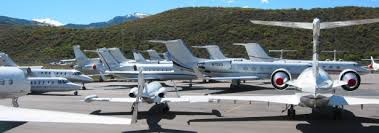
Summer at the Aspen Airport

Tip #6: Remember, the rich are different. Embrace it. It is likely that a fleet of Range Rovers show up and they all step out with enough gear to stock a new shop. That doesn’t mean a thing. The fish don’t care and nor should you. They’re people – just like you (but with a lot more money). There’s no need to suck up. Treat them like you want to be treated and, trust me, you will be rewarded by either a great tip or a new regular repeat client.

Tip# 7: Practice the three “T’s” – Teach, Therapy, and Tolerance. Being a great guide is not how good of a fisherman you are (although it helps), it’s more about how well you understand your client. I did a trip one year with a client that I had guided a few times before. This trip she wanted to fish a little bit, but what she really wanted to do was to learn how to drive a stick shift. So our day was planned out where we fished for an hour, teach her how to drive my stick shifted-car for three hours, then fish again for an hour. She was a client for years. She booked consistently and always tipped well but what I found the most rewarding was never knowing exactly what we were going to do the day I was fishing with her.

Tip#8: Don’t sleep with any of your clients (see fishing above). Nothing good can come from this. Worst of all, you have turned a paying client into a non-paying client with “benefits”. And if it turns bad, like it always will, and their husband or wife finds out, there goes all of their referred client friends and any potential for new referrals from them.

Tip# 9: Have another skill. It can be anything from tuning skis to bartending to instructing snowboarders to practicing law. Also, being a trust funder, salt-water fly guide, or a chef, will work. It is not only important to have a plan, but as a fly guide in a touristic, seasonal, resort destination, with unpredictable run-off and conditions, you must also have a Plan B, and C all the way up to Z. Sure, some people can and do make it as a full time guide, but only if you are willing to budget. Unfortunately, most guides are fiscally inept and easily led astray by being surrounded by pro-deals and new gear in the shop – there is always that new reel or new 9-weight rod you might need for that Christmas Island trip you’ve been saving up for. This one I know from experience.

Tip # 10: If you really love fly-fishing, you love the river and everything it offers. Remember that you weren’t born an expert fly fisherman and your clients want to learn from you. You’re on the right path. It’s not hard to survive if you’re smart about it.

So if your ambition is to become a wealthy, full-time fly fishing guide, traveling around the globe and living the lifestyle, go for it. The fact is, I live that life style. I may not wear Man-Fur or have enough money to date Paris Hilton, but I am rich in experience and I have made a bank load of friends. The only cash I have is a CD in my truck of Johnny Cash, Folsom Prison Blues. To tell you the truth, I wouldn’t change a thing.

Glenn Smith

(This is an article I wrote for Taylor Creek Fly shop which I was a professional guide for 18 years.I also submitted to The Drake Magazine, I think it’s pretty good. Let me know your thoughts.)