Fly fishing is a rhythm. Cast, drift, mend, repeat. It’s the cadence of the river, the whisper of the line, the sudden, electric pull of a strike. But should it have a soundtrack?
Some anglers swear by the purity of silence—just you, the water, and the fish. Others like a little background music, maybe even headphones tucked under a cap, providing a personal playlist while they work a hatch. Is one approach better than the other? Let’s wade in.
The Advantages of Fishing with Music
1. It Sets the Mood
Music can shape the experience. A slow morning with mist rising off the water? Maybe some jazz, something with a little swing to match the rhythm of a dry fly landing just right. Chasing aggressive browns at dusk? Some bluesy rock or even a little outlaw country might fit the mood.
2. It Can Keep You Focused
If your mind tends to wander, music can be a good way to stay dialed in. A steady playlist might help you keep a patient rhythm while waiting for the right moment to strike.
3. It Drowns Out Distractions
Wind noise, distant highway hum, the occasional weekend warrior shouting about the one that got away—music can keep you in your zone and help block out anything that disrupts your flow.
4. It Adds Personal Enjoyment
Not every fishing trip is about hardcore technical casting. Sometimes, it’s about relaxing. If music helps you unwind while you stand knee-deep in cold water, why not?
The Disadvantages of Fishing with Music
1. You Lose Some of the Natural Soundscape
One of the greatest parts of fly fishing is the soundtrack nature provides: the murmur of the current, the slap of a tail, the sudden, sharp rise of a trout breaking the surface. Music can drown out these subtle cues and make you feel less connected to your surroundings.
2. Safety Concerns
Headphones can block out important sounds—like a fast-moving drift boat, a startled bear crashing through the brush, or a buddy calling out a warning. Even just background music on a speaker can dull your awareness of what’s happening around you.
3. It Might Affect Your Fishing Instincts
Fly fishing isn’t just about seeing the fish; it’s about feeling them. Sometimes, you hear the rise before you see it. If you’re locked into a song, you might miss that soft plop that tells you where to cast next.
4. It Can Distract from the Experience
Some anglers fish to disconnect. Adding music—especially if it’s coming from a phone—might keep you tethered to the world you’re trying to escape. Notifications, texts, even the temptation to check the time can pull you out of the moment.
The Verdict? It’s Personal.
There’s no right or wrong answer here. Some days, a little background music enhances the experience. Other days, the river itself provides all the sound you need. If you go for headphones, maybe keep one ear open. If you play music out loud, keep the volume low and be mindful of others who might prefer the quiet.
Because at the end of the day, the river has its own music. Sometimes, it’s worth listening to.
When it comes to investing in and committing to fly fishing gear, the options can feel overwhelming. From rods and reels to lines and leaders, the choices are vast, and making the right decisions can be daunting. That’s why relying on reputable fly shops, professional guides, and trusted industry leaders is essential for selecting gear that will last and suit your long-term needs.
Expertise Matters
Local fly shops and seasoned guides offer more than just a point-of-sale. These professionals bring years of experience and knowledge, and they understand that the right gear is critical for both performance and enjoyment on the water. Their recommendations are based on factors like local water conditions, target species, and your specific skill level, ensuring you get gear that will work for you—not just for today, but for years down the road.
Getting You Geared Up
A reputable fly shop doesn’t just push the most expensive rod or reel; they tailor their advice to match your needs and goals. Whether you’re a beginner looking for durable, versatile gear or a seasoned angler ready to upgrade, these experts help you find the right balance between quality and cost. Professional guides can also offer insights from the water, sharing what gear holds up in real-world fishing conditions.
Tried-and-True Brands
Leaders in the fly fishing industry—those brands and manufacturers with long-standing reputations for excellence—should be your go-to for high-quality gear. Trusted names like Orvis, Sage, and Simms have spent decades refining their products. Fly shops often carry these top-tier brands, knowing they stand the test of time in durability, performance, and innovation. There are also boutique brands that are fantastic but come at a premium, are they worth it? Yes they can be, it’s up to you and you budget. Think of it this way, A Timex and a Rolex are both watches but….
Think of it as Long-Term Investment
Fly fishing is a sport where investing in quality gear pays off in the long run. Reputable fly shops and guides emphasize this point, recommending equipment that won’t need replacing after a season or two. Rods, reels, and lines crafted from premium materials will last, saving you from constantly upgrading and allowing you to focus on what matters: enjoying your time on the water.
Customization and Fine-Tuning
Another advantage of working with experts is the ability to fine-tune your setup. Guides and shop staff can help you choose the right line weight, reel size, and leader length to ensure your gear performs optimally for the type of fishing you plan to do. This attention to detail is something big-box stores or online retailers can’t match, as they often lack the specialized knowledge needed to provide custom advice.
Supporting the Local Fly Fishing Community
When you purchase gear from a local fly shop, you’re not just outfitting yourself; you’re supporting the fly fishing community. These shops often serve as the heart of local fishing scenes, offering educational resources, conservation efforts, and a place for anglers to connect and share experiences. By supporting them, you’re investing in the longevity of the sport itself. Plus, how would a shop in Houston EXACTLY know what hatch is happening in Bozeman?
Is That it?
Fly fishing is a gear-intensive activity, kind of, but by relying on the knowledge and experience of reputable fly shops, professional guides, and industry leaders, you can make informed decisions that will serve you for the long term. These experts not only help you choose the best gear but ensure that your investments are built to last, allowing you to enjoy the sport for years to come. Once you’re set up you’re good to go; but like any interest, your always adding, changing, upgrading, fishing for different species, start fishing elsewhere, or what I like to say, “buying jewelry” because you want to…Trust me
I love my job. I’m a professional fly fishing guide in the beautiful Roaring Fork Valley…Angling on the Fork, The Frying Pan River, The Crystal River and even down on the “Big Muddy” aka The Colorado river. as my mentor, John High use to say. We have so much access within an hours drive, no matter what direction you point.
We are lucky.
During the high season, many of us guides are on the water from 7 am until dark, 6-7 days a week, by choice. As the saying goes, “Make hay, while the sun shines” or something like that. In short, we need to work all we can, it will ineveably slowdown and guide work will dry up. But the inevetable will happen as summer passes by and the days get hot, we all start to get crispy, grumpy, short, sarcastic or more fishing appropiate, salty.
Just the other day I was out with some great people, some neverevers, but still nice people. Our day was strong, really strong, however that caused me undue stress and my temperment to be tested. Trust me, I was pleased with our success, but what triggered me was that the clients thought that this was the norm. They began to make it a compitition with total disregard for the fish and the art in which it took to catch them.
Nothing will set me off more than that. So I bit my tongue and tried to educate the newbies that we’re out here for more than numbers and a InstaGram photo.
This bring me to why I wanted to write a post on the 10 things I believe that all of us guides need to remember. So here we go:
Always be educating all aspect of our sport from technique to etiquette, habitat to knots.
Remember it’s a day of fishing for you, but it’s the clients “big trip” they may only do once a year. They are paying real money for your full attention.
We are to be the example of what our sport coveys: Tradition, Awareness, Problem-Solving, Beauty, Stewardship
Treat the fish with care and respect. They’re not disposable entertainment, they are our business partners
Try to limit photos. There is no reason to take pics of every fish. Truthfully, if you do that it’s kinda sad really.
I love this one. Think of how many “family memories”, stories, photos you’re part of. Daunting if you think about it. We are many peoples “life highlights”
We are ambassadors out there-act like it. Don’t be a dick.
Let things go, literally and figuratively, Release the fish quickly, let go of conflicts, don’t get agro if someone snakes your water, don’t get angry with lost fish, bad clients always go away.
Try to get away from “numbers” as an endgame. Fact is, if you condition your clients to count fish that make it to the net and disregard the ones that “long distant released”, their next trip may not be as successful due to a number of varibles, so it will never produce enough as last time. Remember why your out there. Catching fish is awesome but a memorable experience and leaving happy far surpasses the count.
Be a class act, we have a great job, the best job, that many people wish they could have..
Well here we are, it’s mid-October, the first snow has fallen and the fly fishing season is slowing down. It is that time of year that the army of amazing guides start to migrate to other waters or sunny destinations where the water is clear and the beer flows like beer.
I had every intention of writing a blog post once a week with magical stories of fish caught and the newest, freshest techniques, as well as videos of showing knot-tying, beautiful water, and tours of our local rivers. As you can see, my feed was as dry as a spring creek during a drought, yes, I did none of what I promised myself to accomplish.
But the year is not over! So here I am, trying to backpedal and make journalistic amends. I got busy, the bar is next door to the Fly Shop and 6 AM comes early during a 7 day a week workweek.
Enough of the filler content, let’s get right into fish pics!
So this photo series is just proof to recuse me of the appearing unengaged and lazy. Truth is, I was fishing like a bandit and making memories for my clients as best as I could. So please keep checking back here for new and interesting content and I promise I wont disappear like a dry-fly hatch on a windy day!
Now that September has come and fall is very much in the air, it is time to catch a breath and reflect on what a crazy summer it has been.
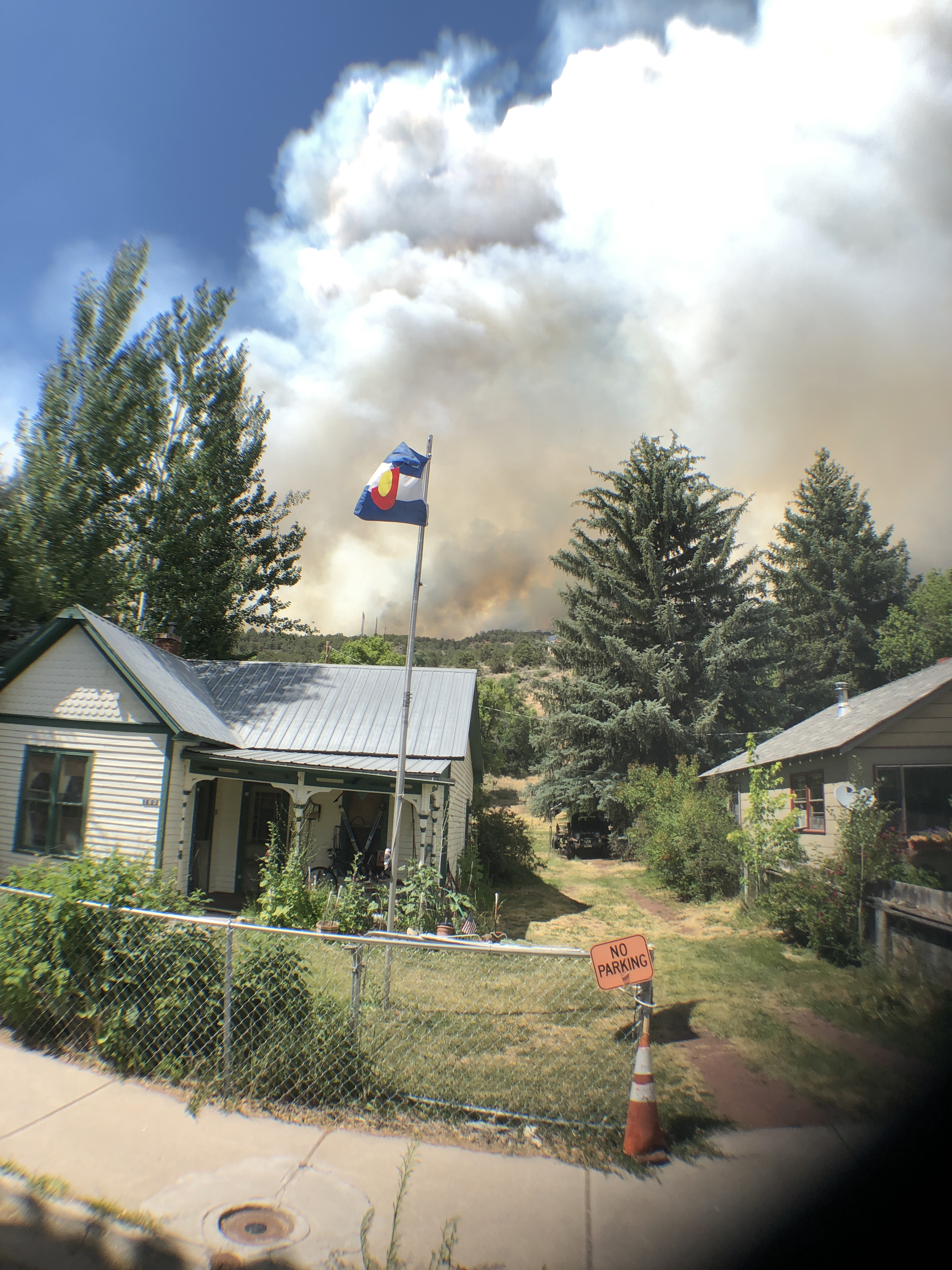
First and foremost, the fishing has been great all summer long. Don’t believe what social media tells you… If you keep up with what’s happening in our little hamlet, the Roaring Fork Valley and the quaint town of Basalt, you may be aware of all the excitment that has happened here; we had the Lake Christine Fire that happened on the 4th of July and thereafter burned for over a month. I provided a link to the stats as well click here and it will direct you to the photos
We also had a terrible winter last year which in turn made our water levels in the Roaring Fork critically low which forced the DOW to regulate the times in which we could fish due to the water temperature. At 66 degrees and above, the stress on the trout can kill them (and we don’t want that) so all the valleys guides did their best to “keep’m wet”, honor the request of the experts and take great care. Bravo to all who did their part.
But we persevered!
From my POV, I had a great summer and a very interesting one to say the least. Due to the challenges the fish was great but different. What I found day in and day out was that it felt that all the hatches were somewhat off. It seemed to be a month ahead of schedule as well as thin. We didn’t get that chocking caddis hatch, nor the full on “steak and potato” Green Drake hatch in August like normal. But you know what? It still all worked out. The PMD’s were strong, the BWO’s were off the hook, Hoppers are falling in the river like candy and a prince nymph is always money…
Another super cool thing that happened is that I was featured in The Aspen Sojourner Magazine with a sweet photo spread about fly fishing. I will post more about the article but want to share some of the photos they used. Online
Now the part some of you have been waiting for, the 2018 season of badass photos of fish and awesome clients, so here we go!
And last but not least, as not only a Fly Fishing Guide at Taylor Creek Fly Shop in Basalt I am also a producing artist, which makes this next photo even more amazing. I had the opportunity to fish with some of the top Artist, Curators and critics! Here is me with Heidi Zuckerman, Director of the Aspen Art Museum, Hans Ulrich Obrist and wonderful fly fisherman and world renowned conceptual artist Joseph Grigely
Now that it has become a bit more quiet, I am planning on making Guide Tip videos about shortcuts, affective techniques, fly selections, drift tips and much more.
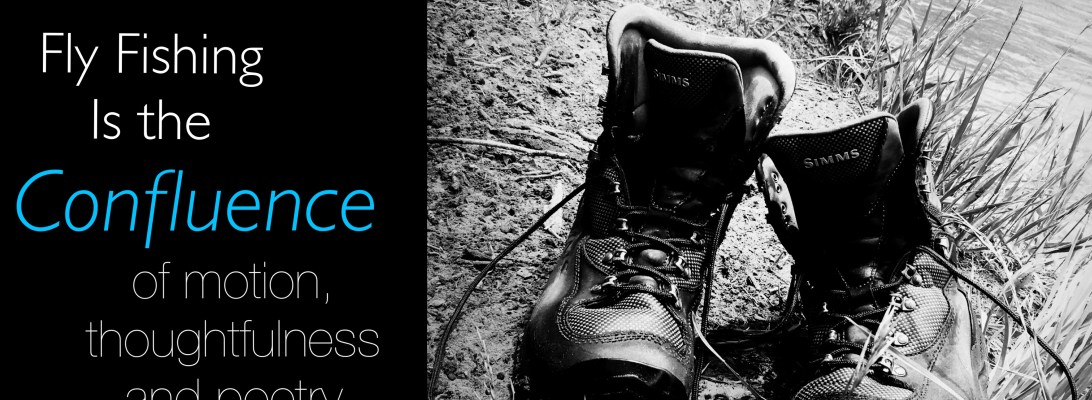
Above is a picture of my Simms guide boots, number 14.
I don’t know about you but, I burn through gear. Boots, laces, fly boxes, sometimes waders, tippet (as I should), guide vehicles, the list goes on and on. The reason being, is that I use EVERYTHING everyday, so I am hard on things. It’s part of my routine every spring I take stock in what is needed, wanted or trashed for the upcoming summer fly fishing guide season.
But in this task, I get somewhat melancholy and reflective. I like new stuff but I get attached to things that have served me well. My trusty “Old School” Simms vest which I will only replace if falls off my back and it better be destroyed.
That Simms vest is equivalent to an office desk you work at everyday, a toolbox to a craftsman, a paint brush collection to a painter, it’s my domain: a place for everything.
It contains, in each specific pocket, a purpose…
Upper left-hand chest pocket; is strike indicators, yarn.
Right lower outside pocket; Nymph boxes: #1 Stoneflies, Caddis #2 Drake specific, PMD and midge
Left lower outside; Seasonal Dries. Drakes, Blue Wing Olives, PMD and emergers.
Inside left, top; Leaders and tippet
Inside right, top; Current fishing license, nail knot tool.
This hasn’t changed for ever. It works for me.
But Let’s talk about those boots I started with… yep, boots are expendable, costly and needed. I have no problem burning through boots, I feel I should be a factory sponsored boot tester, somebody needs my abusive nature for truly, the betterment of the world. But I always get sentimental about my boots. They have seen a lot of adventure, the met amazing people, trudged across riverbeds in some the most beautiful terrain the world has to offer.
Over time, with constant river water molding and forming the boot to fit only my foot, knowing that I drag my toes when I walk and when I wade, I walk completely flat-footed for stability. They have seen a lot in a relatively short amount of time. amazing if you thin about it.
So I have been through 14 pairs of Simms boots. each one of them allowed me to do what I love, what I’m good at and share my skills and knowledge with aspiring and gifted fly fishermen. Call me out on ridiculous sentimentality but as any real angler understands, pay close attention to the water, the environment, the birds, the bugs, the seams and in my view, all the trappings that gift me the ability to enjoy the sport I adore.
We, as humans, inherently are impatient. Remember the time while you were sitting at the stop light and the light turns green and the car in front of you didn’t move as quickly as you thought it should have? Or that time you were at Starbucks and the customer in front of you hadn’t made their drink decision by the time they reached the counter? How did you feel? Stressed? Angry?
What’s important in these examples is that, why were you getting bothered? More importantly, even before those incidences happened you were ALREADY preparing to be bothered. You were locked and loaded with frustration waiting for a reason to get rattled. You’re thinking, what does this have to do with fly fishing? In my opinion, everything.
It has to do with expectations, what you believe should happen. You hit the river with expectations about how many fish to catch, that your favorite hole will always be open, you’re only going to fish dry flies, so on and so fourth. Fact is, none of those things are in your control. What is in your control is that you know you’re going fishing, that’s it…unless there is a car in front of you refusing to drive fast enough, you may be late…
What I want to offer is simple 6 things that will make your day on the river perfect, before you wet a fly:
1) Be thorough; Just take the time to look at your stuff and take inventory. Look in the box and see what flies you have and what flies you need. Make sure you have everything you need for a day out on the water.
2) Ask questions and be open minded; Be the guy that comes in the fly shop that the shop guys are happy to see and the guides want to talk to. Leave the fishing ego and stories at home.
3) Don’t run to the water; I have seen it a million times, people race up the road and jump out of the car to be the first on the river. Staking out territory is, unfortunately, a residual effect of more anglers on the water, but it is unnecessary. There is always some place to fish, be open to new water, it might be a new great spot.
4) Look up; Every fisherman, I think, is to eager to start casting. Take time to watch for birds, Where they are? Are they high or low? Are they feeding? What there eating? This can tell you a lot and give you great information. If the birds are high, you are best nymphing. If they are low, a hatch is starting and that’s a great thing.
5) Make and take time; Notice everything…the trees, rocks, the weather, the weeds, the colors and the smells…all of this adds to your experience. Most importantly, it’s why we are out there.
6) Remember; Remember that you work hard, remember the chores you still have to complete, remember that we are lucky and that a fish eating our flies is a gift. So remember to remember.
If you add these tips to your day and learn to expect nothing, you may find that you will always have the best day ever.
The sport of fly fishing is always evolving; from the introduction of the newest materials, cutting-edge designs in reel development, different rod composites for casting speed, or lack thereof, and even high-tech strike indicators made out of space age polymers that also went to the moon. Evolution is just that; a continuous and never-ending change.
Does evolution really matter? Will it help me catch more fish? Will I gain rock star status and the inevitable cool factor that comes with it? Even more to the question; why exactly do I need any of this? Do I need it because I’m fishing with a $15 rod and reel setup from a big box retailer? Am I so experienced and savvy that I can tell the subtle nuances of the casting characteristics between two high-end rod company offerings? It makes you wonder…
In my youth, I started fly fishing with a very cheap rod and was very concerned that I was being ripped off because I spent the extra six bucks to upgrade to the $21 “top-of-the-line” kit. The best part of that story is that I didn’t even understand the difference, but yet it seemed to matter. So, just like anyone that discovers a new found passion, I started to do my homework.
I casted a new “real” fly rod at my newly discovered fly shop and actually felt the difference. It casts lightly, it loads slowly, is responsive and light in weight, complete with reel seats made of real silver and birdseye maple. Sold! After 21 years as a guide, my rod and reel collection is pretty nice. I’m sure you can understand that I’m just keeping up with the Jones’…the Jones’ with a bitchin’ fly rod collection!
Now, keeping in line with the evolution theme, I started looking into the latest rage in all the fly fishing and trade magazines; Tenkara! I like the whole idea of it; simple, clean, but with a doctrine. It goes back to the absolute basics of catching a fish with a line and a pole.
I like the marketing ploys of it. If I fish in the traditional tenkara way, I will become a wiser, enlightened, at-peace-with-the-world and in-touch-with-my-inner-Zen, kind of angler. Fantastic!
This spoke to me. I have been a student of Zen Buddhism ever since I read, “Zen and the Art of Motorcycle Maintenance” back in high school during 1979. I like the idea of it. I have done this style of fishing off and on, but never in a full commitment kind of way. So begins my journey into the far eastern style of fly fishing. I picked up a Patagonia tenkara rod (which we sell at our shop) and all of the other things that I needed to become a simple, uncomplicated, unencumbered tenkara angler. I have to admit, I like the fact that all I really need is tippet, tenkara flies and a net. All that I had left to do is to dive head first into the depths of the internet. I read blogs, watched videos (including Japanese YouTube videos) and sorted through as much beta as possible. I had no clue what they were even saying in Japanese, but I’ve always been more of a visual learner anyhow. I did pick up some good tips, but not really anything that I couldn’t have figured out on my own.
Here comes the philosophical rub; I have spent a lot of time on the river fishing in this new/old way and have caught some fish using the Far Eastern methods that the Tenkara purist (sensai) would recommend, and I do enjoy that but…I also like to catch fish. Truth be told, tenkara may not be the best way to achieve that end result.
I found it funny that in most of the foreign YouTube videos I watched, all of the tenkara dudes were smoking cigarettes while fishing. This must be because they needed something to do between their lack of strikes! I love the origin of the tenkara technique but not so much the end game. I suppose that makes me a bad Buddhist.
Instead of counting the reasons to never do this again I wanted to share with you my love of this technique and why I will always keep a tenkara rod me. I believe them to be superb fishing tools. All that I had to do was evolve the method to my own personal needs. I wanted this to become that special tool I keep “in my bag”, like a 6 degree fairway wood is to a golfer or a custom plane is to a woodworker.
A tenkara rod is an absolutely fantastic dry fly rod. It casts the fly perfectly, effortlessly, and presents the dry fly gently with the line rarely ever seeing a tangle. They are built for “high-sticking” pocket-water and force you to become a precision caster. After all, you can’t false cast to be a hero with a wind knot in your line. In tenkara, you look, you cast, and that’s it. I had to give up exclusively using traditional, reverse-hackled tenkara flies with the traditional line setup and adapt it to my own personal line set up using Western flies. It may not be the purist approach, but my catch rate and action increased exponentially.
Another benefit to this discipline is that it teaches you how to manage a fish during the fight. Before you even start to fish tenkara style, you need to look closely at your surroundings and choose where you’re going to be able to land that big boy, making sure that you are in a good position to move. You need to plan which eddy you are going to lead that fish into. There is no reel and no drag to rely on. The length of line you have is all that you’ve got, and trust me, this is easily the most interesting challenge of tenkara; landing the fish. Thusly, you have to be aware of every rock and be in tune with the environment around you. Now that sounds Zen-like to me!
Where I found tenkara to be the most rewarding, was in the hands of a disabled veteran. I had the pleasure of being one the guides that took a group from the Wounded Warrior Project out for a day of fishing on the Fryingpan River this past summer. These heroes’s have sacrificed enough and needed some joy and some diversion. They have literally given life and limb to help secure our way of life and deserve the utmost of our respect.
Two Great Soldier’s I had the pleasure to take Fly Fishing.
One of the soldiers I fished with had very little movement in his arms and upper body. He could not stand on his own, so we brought a bar stool for him to sit on in the river. Though not the most conducive situation for traditional fly casting or fishing, but what he could do well was to hold and move a rod in a few workable positions. I decided to set him up with one of my tenkara rods that allowed him unencumbered casting and no fly line to strip or manage. He could easily roll cast the fly and simply lift the rod to set the hook. This guy nailed it! He set on every strike and we landed two really nice trout. He was thrilled. It was the essence of “fishing with a fly”. I could not have been happier helping others find some joy.
What is important to remember is that everything changes and evolves, or de-evolves over time. I am very pleased that I discovered tenkara and that I can now share it with others. I may not follow the idea of traditional Japanese fly fishing culture to the letter, but be it between technology and tradition, I always remember to ask the question, “What will make a difference to me or someone else?” Keep that tip up!










 Glenn On The Fly