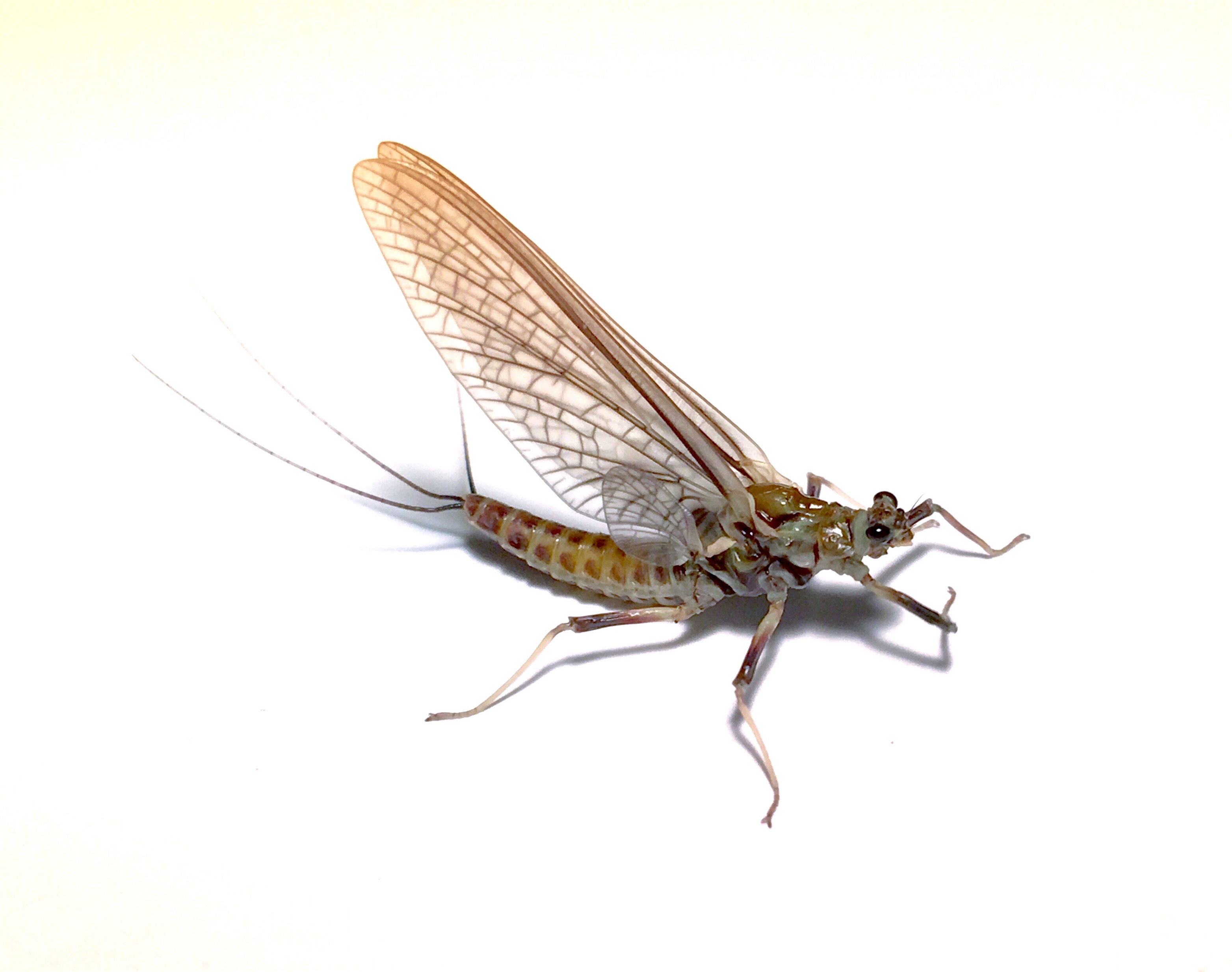
Mastering Fly Fishing In Colorado: A Seasonal Bug Guide


take the time

If you’ve ever stood knee-deep in a Colorado river, rod in hand, and thought, “What the hell are these trout eating?” — welcome to the eternal question. I’ve been guiding these waters for over three decades, and when I’m not tying on leaders or #22 midge patterns, I’m reaching down in the river flipping rocks like a mad scientist. The trout don’t give up their secrets easily, but the bugs will if you know how to ask.

As a guide, this isn’t just fly fishing, It’s entomology in waders. The best anglers I know read rivers the way a chef reads produce at the market — they can smell what’s fresh, what’s in season, and what’s about to come on strong.

Let’s walk the Colorado calendar, month by month, bug by bug.


🔍 First, a Quick River Trick

Forget Latin names for a moment. You don’t need a PhD to tell what’s going on — just curiosity.

  • Turn over a rock in a riffle. If you see a little flat pancake bug with three tails, that’s a mayfly nymph. If you see a worm in a stick coffin, that’s a caddis.
  • Dip a net. Shuffle your boots and let the current wash the bugs in. You’ll see the season’s truth in mesh.
  • Watch the wings. Mayflies hold them like tiny sailboats, caddis fold them like pup tents, stoneflies lay ‘em flat like a paperback novel.

It’s river code. Break it, and suddenly your fly box starts to look like a menu instead of a mystery.


🌦️ Colorado’s Bug Calendar

January – February

The rivers are cold, the trout are sluggish, but the midges never quit. Tiny black, olive, or red specks. If you’re not fishing flies smaller than your fingernail, you’re just decorating hooks.

March

Here come the first Baetis — Blue-Winged Olives. Cloudy afternoons, the river suddenly wakes up. Trout start rising like champagne bubbles. Tie on a size 20 parachute and you’re in business.

April

Stoneflies start creeping along the banks. Still some Baetis. This is the season of patience — trout are looking but not gorging yet. Small stones fished tight to structure can turn heads.

May

The famous Mother’s Day Caddis — thousands in the air, a snowstorm of wings. You’ll either have the best evening of your life or watch trout eat everything except what’s tied on your tippet.

June

Runoff. Chocolate milk flows. But don’t panic — bugs don’t stop because the river swells. Golden stones, a few drakes higher up. Fish edges, back eddies, and bigger, juicier patterns.

July

The big show: Green Drakes. Evening magic, trout boiling in shallow riffles. PMDs and Sallies mix in like side dishes. This is Colorado’s fireworks.

August

Tiny Tricos in the morning — clouds of black and white mayflies spinning like smoke. Midday turns to hoppers, beetles, and ants. Fish get picky, so you either go microscopic or foam-bodied.

September

Fall Baetis arrive, olives against gold cottonwoods. Low water, spooky trout. Long leaders, soft casts, and faith in flies you can barely see.

October

Blue-Winged Olives again, joined by the occasional pumpkin-sized October Caddis. If you’re tired of tying tiny dries, throw a size 12 orange Stimulator or Hopper and watch a brown trout rocket from the depths.

November – December

We’re back to midges, small, steady, reliable. Winter trout are honest — they won’t chase, but they’ll sip if you give them something believable.


🧾 Closing Thoughts from the River

Every river has a rhythm, and every bug has a season. Learn that, and you’ll stop guessing what to tie on — you’ll know.

I’ve guided long enough to see anglers frustrated, overthinking fly boxes, swapping patterns every five minutes. My advice? Slow down. Pick up a rock, kneel by the bank, let the bugs tell you the story. The trout are just following the script.

Also watch for birds. They can tell us so much about timing but I’ll save that for another time.

Remember, once you learn to read the river’s menu, you’ll never fish the same way again.

Casting Through Time: The Enduring Spirit of Fly Fishing

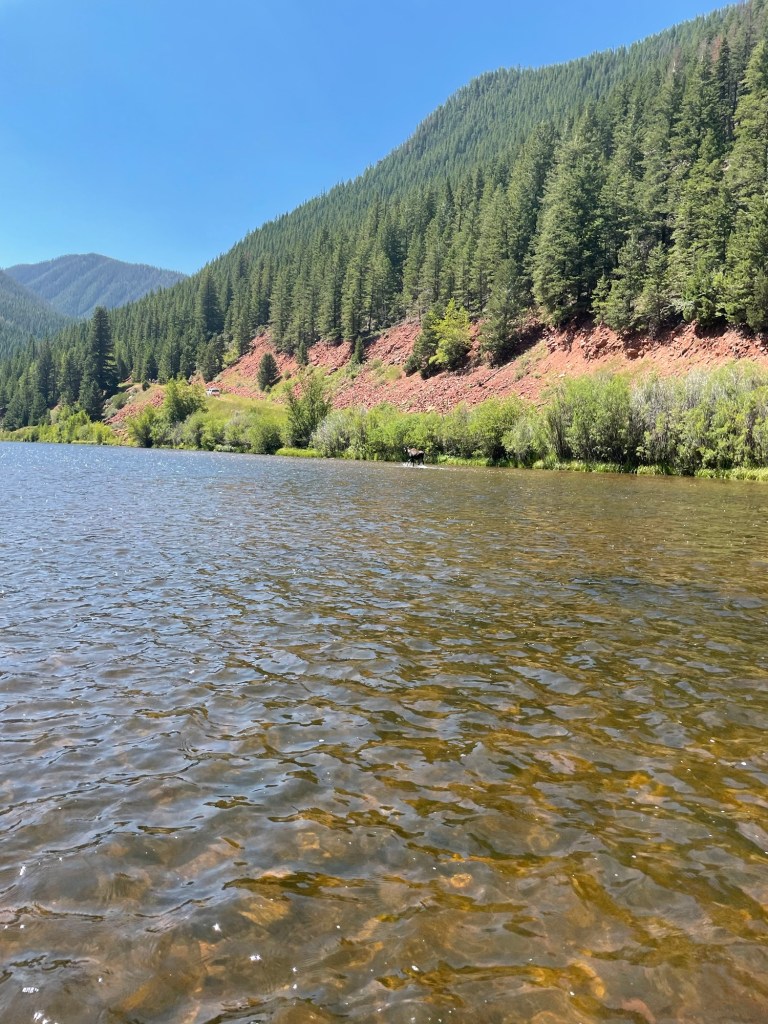
In the quiet moments on a brisk Colorado morning, ready to place my wading boot in the Frying Pan River, I often reflect on the profound legacy of fly fishing. This isn’t just a sport; it’s a timeless pursuit that connects us to nature, history, and a community of like-minded souls seeking solace and sustainability.

Ancient Origins: Threads from the Past

Fly fishing’s roots trace back to ancient civilizations. Roman author Claudius Aelianus, in the 2nd century, described Macedonian anglers using artificial flies to catch fish on the Astraeus River.  Meanwhile, in 12th-century Japan, the method of Tenkara emerged, where fishermen used long rods and simple flies to harvest trout and char in mountain streams.

These early techniques laid the groundwork for modern fly fishing, emphasizing skill, observation, and a deep connection to the aquatic environment.

Evolution of Technique and Technology

Over the centuries, fly fishing evolved significantly. The publication of “The Compleat Angler” by Izaak Walton in 1653 marked a pivotal moment, offering insights into the art and philosophy of angling. Advancements continued with the development of specialized rods, reels, and lines, enhancing the angler’s ability to present flies with precision.

Despite technological progress, the essence of fly fishing remains unchanged: a harmonious dance between angler and fish, guided by patience and respect.

Catch and Release: A Conservation Ethic

The practice of catch and release, now integral to fly fishing, has its origins in 19th-century Britain, aimed at preserving fish populations.  In North America, conservationist Lee Wulff championed this ethic, famously stating, “A gamefish is too valuable to be caught only once.”

Today, catch and release is more than a technique; it’s a commitment to sustaining healthy fisheries for future generations.

Seeking Solitude and Connection

Beyond the mechanics, fly fishing offers a sanctuary from the noise of modern life. Standing in a river, surrounded by nature’s chorus, one finds a meditative rhythm in casting and retrieving. It’s in these moments that anglers connect deeply with the environment, finding peace and clarity.

A Legacy of Stewardship

Fly fishing’s history is rich with individuals dedicated to conservation. In 1939, Roderick Haig-Brown penned the first code of fly-fishing ethics, emphasizing the angler’s role in protecting aquatic ecosystems.  Organizations like Fly Fishers International continue this legacy, promoting sustainable practices and environmental education.

Conclusion: Embracing the Timeless Journey

Fly fishing is more than a pastime; it’s a journey through history, nature, and personal growth. As we cast our lines, we join a lineage of anglers who value not just the catch, but the experience, the environment, and the enduring lessons the river imparts.

Until next time, may your casts be true and your reflections deep.

If you’re interested in exploring specific fly fishing techniques, gear recommendations, or conservation initiatives, feel free to ask!

Guide Glenn Smith

The Legend: An unlikely true story about personal change and a fresh pair of eyes

The Legend had been guiding on the Frying Pan River for over thirty years, though few people knew his real name. Everyone just called him “The Legend.” His reputation stretched across the Rockies like the river itself—strong, steady, and impossible to rival. He knew the Frying Pan as if it were an extension of himself, every eddy, every riffle imprinted in his mind like a map. Anglers traveled from all over, hoping to catch even a fraction of the trout he seemed to entice on any given day.

That morning, as the light fog lifted from the river, The Legend sized up his new client. Derek was a typical novice—his gear mismatched, his waders still too clean, and his boots clumsy against the rocks. The Legend had seen a hundred Dereks in his day, all eager to impress, all about to be schooled by the river’s subtle demands. So the day began.

They waded into the river, the cool water pressing against their legs, and The Legend led Derek to a deep pool, affectionately known as M1, a prime spot for trout. He figured he’d spend most of the morning untangling lines and showing Derek the proper way to cast. He had his usual speech prepared about committed backcasts and the art of reading the water. But before he could offer a single word of advice, Derek did something that made The Legend pause and mumble, “WTF”?

Instead of lifting his rod in the traditional way, Derek swung it low, almost as if he were side-arming the cast. His line unfurled in a sweeping arc just above the water, not cutting through the air, but gliding along the surface. The fly settled with such delicate precision that The Legend had to blink. The trout must’ve thought it was the real thing because, before The Legend could process what he was seeing, Derek hooked a fish.

“What was that?” The Legend asked, genuinely puzzled.

Derek shrugged. “Just seemed easier than what I usually see.”

The Legend shook his head, sure it was a fluke. But then Derek did it again. And again. Fish after fish. Each time, he made that strange, low-flicking cast, and each time the trout responded. It was like watching someone break every rule of fly fishing… and somehow perfecting the art in the process.

By mid-morning, The Legend was in awe. He prided himself on mastering every casting technique there was, but this—this was something new. Something that seemed impossible, and yet, the results were undeniable.

Finally, The Legend couldn’t resist. “Mind if I give it a try?”

Derek handed over his rod, and The Legend mimicked the cast as best he could, the movement feeling foreign in his hands. It took a few attempts, but eventually, he found the rhythm—the subtle, horizontal flick, the way the line danced just above the water. It was like discovering a secret he hadn’t known was there, hidden just below the surface all these years.

For the rest of the day, The Legend practiced the technique, refining it, testing it in different parts of the river. The fish responded with the same enthusiasm for his fly as they had for Derek’s. By the time the sun dipped low behind the mountains, The Legend knew he had witnessed something that would change fly-fishing forever.

They called it the “Frying Pan Never, Ever Do that Flick,” a name that stuck as more and more anglers noticed The Legend’s new method. He taught it to his clients, and word spread quickly. Soon, other guides were asking him about it, trying to understand what made it so effective. Within a year, it was being used on rivers across the country, revolutionizing the sport.

Though the “FPNEDTF” or the “Legendary Flick” for short was associated with The Legend, he never forgot where it had come from. Derek, the rank amateur for somewhere The Legend can’t recall, had introduced it without even knowing what he’d stumbled upon. In the end, The Legend’s mastery of the river had been challenged by something as simple as a fresh pair of eyes—and it was a lesson he carried with him for the rest of his days on the water.